










Making It to the Crypto Rich List

Crypto is often described as “private” because non-custodial wallets are not directly tied to real-world identities. In theory, no one can look at a blockchain address and immediately know who controls it. In practice, however, the situation is far more nuanced.
Public blockchains such as Bitcoin, Ethereum, Solana, Tron, and others operate on transparent ledgers. Every transaction, balance, and wallet interaction is permanently visible to anyone. This transparency is fundamental to trustless systems, but it also means that a significant amount of intelligence can be extracted from on-chain data. Wallet behavior, transaction patterns, counterparties, and balances can all be analyzed, clustered, and, in many cases, linked to real individuals or organizations using off-chain information.
As a result, while crypto wallets may be pseudonymous, they are far from invisible. The public nature of blockchain ledgers creates a number of tangible risks for individuals holding substantial amounts of digital assets.
Public Rankings by Balance
Holding a large balance often places a wallet among the largest holders globally, whether the owner intends this or not. Below are approximate figures showing how much one typically needs to hold to appear among the top 1,000 and top 10,000 wallets worldwide, including exchanges and custodians. While these numbers fluctuate, they provide a useful sense of scale.
| Asset | Top 1,000 | Top 10,000 |
|---|---|---|
| BTC | ~1,700 BTC | ~300 BTC |
| ETH | ~10,900 ETH | ~500 ETH |
| USDT (Tron) | ~$6,500,000 | ~$1,100,000 |
| USDT (Ethereum) | ~$7,000,000 | ~$600,000 |
| USDC (Ethereum) | ~$3,000,000 | ~$300,000 |
| USDC (Solana) | ~$1,500,000 | ~$120,000 |
Some blockchains even maintain publicly accessible rich lists. For example, Bitcoin balances can be reviewed here, while Ethereum balances are visible here.
While appearing on a crypto rich list may seem prestigious, it also exposes holders to a range of real-world risks.
Risks of Appearing on a Crypto Rich List
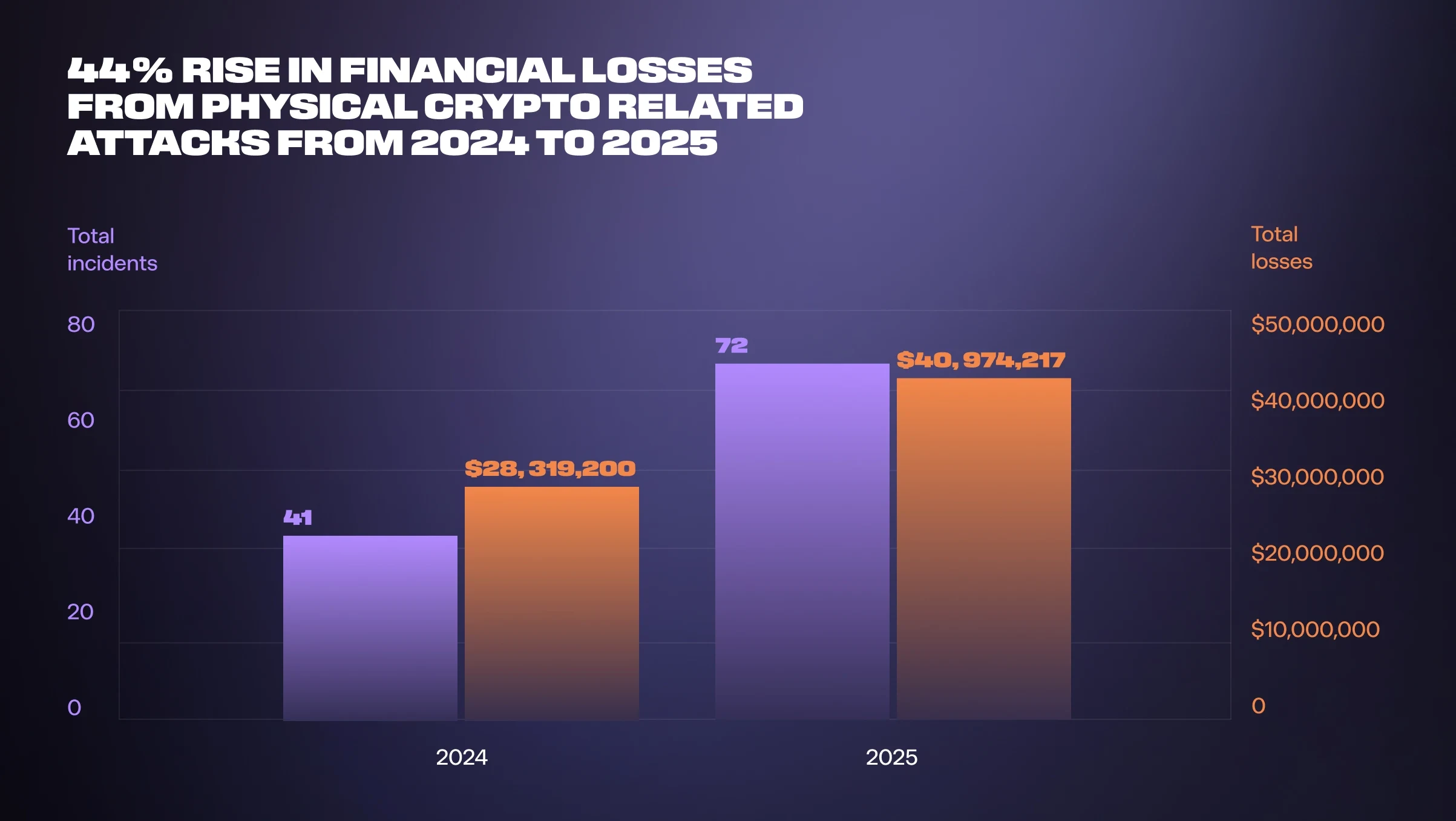
In recent years, there have been multiple documented cases in which crypto holders were targeted for physical extortion.
In 2025, European media reported kidnappings in France where victims were tortured and forced to transfer cryptocurrency from their wallets. In the same year, Latin America saw similar incidents in which armed attackers used on-chain data to identify high-value wallet holders and extract funds under duress. These cases illustrate a simple reality: when wealth is publicly visible and instantly transferable, it can attract violent crime.
Large wallets are also prime targets for cybercrime. There are documented examples where attackers profiled wallets with substantial balances, correlated them with social media activity or leaked databases, and then executed tailored phishing campaigns, SIM-swap attacks, or malware deployments. In several cases, these attacks resulted in full compromise of wallet access and loss of funds.
Given these risks, many high-net-worth individuals prefer not to appear on public crypto rich lists. A common mitigation strategy is to split holdings across multiple wallets so that no single address stands out. However, this approach introduces a different set of challenges.
The Seed Phrase Problem
Each traditional non-custodial wallet is protected by a seed phrase. Losing it means losing access to funds permanently, which is the flip side of the “not your keys, not your crypto” mantra. Best practices for seed phrase storage usually include splitting the phrase into at least two parts and storing each part in two separate physical locations for redundancy (such as risks of fire or theft).
In practical terms, this quickly becomes unmanageable:
- One wallet requires four secure locations.
- Two wallets require eight locations.
- Ten wallets require forty locations (unless you store some of the pieces together).
Let’s be honest, managing this level of operational complexity is impossible for an individual. Any loss, misplacement, or compromise of a storage location can permanently lock a user out of their assets.
What Is the Solution?
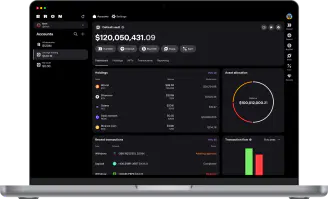
Having gone through these challenges ourselves, we created Bron to address these (and many other) challenges. With a Bron Pro account, users can hold unlimited assets, create up to ten independent wallets, and manage all wallets from a single unified interface. From the outside, these wallets appear completely unrelated on-chain.
For example, a user holding 1,000 ETH across ten wallets would hold only 100 ETH in each wallet. None of these wallets would appear on top-holder lists, hence, not attracting attention of criminals, yet the user would retain full economic exposure and operational control, managing all wallets as easily as if the assets were held in a single account.
Bron also eliminates the seed phrase problem entirely. It uses Multi-Party Computation technology, the same tech relied upon by institutional custodians serving global financial institutions. Institutional investors do not rely on seed phrases; the industry standard has long been MPC (Learn more in our dedicated article).
Before founding Bron, we built Copper.co, one of the leading custodians serving institutional investors globally. We now bring that level of security and best practices to individual users.
With Bron there are no seed phrases to store, split, or protect. Users can lose their device, credentials, or both, and still restore access quickly and securely. Bron is removing one of the largest sources of stress and operational risk in self-custody.
If you would rather have a more technological solution for not being on the crypto Forbes list, we have that too. Together with Zama, we are one of the first wallets to offer shielding, which hides any ERC-20 token from public blockchain explorers.
For example, you can convert USDC into confidential USDC, which won’t appear in public blockchain explorers and is still transferable on the Ethereum blockchain. When you transfer a confidential token, the blockchain record does not show the amount that was transferred. Learn more about shielding in Bron here.
Peace of Mind, Engineered
Crypto was designed to provide financial sovereignty. Without proper operational security, however, that sovereignty can become a liability. Public ledgers are powerful tools, but they require thoughtful design for anyone managing significant capital.
Bron exists to deliver peace of mind through privacy enabled by wallet distribution, security powered by MPC, and simplicity achieved through unified wallet management.
To learn more about how Bron can help you protect both your assets and yourself while operating in crypto, visit https://bron.org.
Disclaimer:
This article is provided for general informational purposes only and does not constitute financial, investment, accounting, tax, or legal advice. Bron is a self-custodial software wallet that provides tools for interacting with blockchain networks. Users are solely responsible for evaluating their own circumstances, and understanding the risks associated with the use of digital assets and self-custodial software.